






![Classic Veranda Suite-[CV]](https://cruisetour.ch/volume/images/original/1600272983.jpg)
![Deluxe Veranda Suite-[DX]](https://cruisetour.ch/volume/images/original/1600272929.jpg)
![Grand 1 Suite-[G1]](https://cruisetour.ch/volume/images/original/1664885589.png)
![Grand Suite-[GS]](https://cruisetour.ch/volume/images/original/1664885585.png)
![Medallion Suite-[ME]](https://cruisetour.ch/volume/images/original/1664885634.png)
![Owner’s 1 Suite-[O1]](https://cruisetour.ch/volume/images/original/1664885676.png)
![Owner’s Suite-[OS]](https://cruisetour.ch/volume/images/original/1664885685.png)
![Royal Suite-[R1]](https://cruisetour.ch/volume/images/original/1650361128.jpg)
![Royal Suite-[RS]](https://cruisetour.ch/volume/images/original/1600272820.jpg)
![Silver Suite-[SL]](https://cruisetour.ch/volume/images/original/1600272873.jpg)
![Superior Veranda Suite-[SV]](https://cruisetour.ch/volume/images/original/1664885810.png)


Route San Cristobal, Ecuador - Kicker Rock, Ecuador - Isla Bartolome - Buccaneer Cove, Santiago - Punta Vicente Roca, Isabela, Ecuador - Bolivar Kanal Kreuzfahrt - Punta Espinoza, Fernandina, Ecuador - Tagus-Bucht, Ecuador - Elizabeth Bay, Ecuador - Postbüro, Floreana, Ecuador Mehr

An impressive tuff cone has been carved by erosion into an outstanding natural sculpture, being a resting place for marine birds such as blue-footed bobbies and brown pelicans. One of the most beautiful white sand beaches of the Galapagos (swim or snorkel). View sea lions, sally lightfooted crabs, blue-footed bobbies. Behind the dunes, you find a coastal lagoon, which was visited in the past by the locals to extract salt, today it is home to some shorebirds such as stilts and plovers.
The vegetation (as it is one of the oldest islands) shows some endemic species such as Scalesia incisa (flowering plant) only found on this island.
Bartolomé Island is a volcanic islet in the Galápagos Islands group, just off the east coast of Santiago Island. It is one of the „younger“ islands in the Galápagos archipelago
Punta Vicente Roca is one of the marine sites Isabela Island has to offer. On the southern side of Ecuador Volcano, the tip of land on the western end of Isabela is named after Vicente Ramon Roca, President of Ecuador from 1845-49, who as Prefect of Guayas had proposed the Ecuadorian annexation of the Galapagos Islands in 1831. The geological formations, the underwater caves and lava tubes offer fascinating views of the coastline. View less
The South Equatorial Countercurrent hits this part of the archipelago from the west and the water offers abundant food sources for different marine life and seabirds. It is normal to see Pacific green turtles, but sharks, rays, whales and dolphins can also be expected, apart from a small colony of fur seals. Blue-footed Boobies, Nazca Boobies, Brown Noddies and other seabirds nest in the cliffs and both the endemic Galapagos Penguins and Flightless Cormorants have established small colonies nearby. Marine iguanas also like this area because of the rich variety of seaweeds growing underwater along the western coast of Isabela. As a marine site, deepwater snorkeling is also possible at Punta Vicente Roca.
With the gentle slopes of La Cumbre volcano in the distance, the low, lava-forged coast of Punta Espinoza on Fernandina Island is a spectacular sight. Hundreds of marine iguanas rest on the black rock of recent lava flows absorbing heat from the stone and defending their territories against one another. Galapagos sea lions and their pups also take shelter here, resting on the beach and playing in the shallow tide pools sprinkled along the coast. View less
Walk past high sandy areas where marine iguanas lay their eggs and along low, shallow mangrove ponds ringed with bright red Sally Lightfoot crabs and Flightless Cormorants drying their stubby wings in the sunshine.
Die Tagus-Bucht wird von einer steilen Felsenküste begrenzt und bietet seit Jahrhunderten Schiffen und Yachten Schutz. Die Bucht ist nach der britischen Fregatte HMS Tagus benannt, die 1814 die Galapagos-Inseln besuchte. Bereits in den 1830er Jahren hielten andere Schiffe ihre Besuche fest, indem sie ihren Namen auf die Felsen malten oder ritzten. Beim Anflug werden oft Galapagos-Pinguine und flugunfähige Kormorane gesichtet, beides Vögel, die hauptsächlich an der Westküste von Isabela und der benachbarten Insel Fernandina vorkommen.
Vom Landeplatz aus führt ein Pfad durch einen Weihrauchbaumwald am Darwin Lake vorbei zu einem Aussichtspunkt auf einem Spritzkegel. Während der Wanderung sind verschiedene Landvögel wie Mittlere Bodenfinken, Galapagosbussarde, Gelbspötter sowie Großschnabel- und Zinnoberschnäpper häufig zu sehen. Braune Noddies und Blaufußtölpel bevorzugen die Felsen entlang des Ufers.
Die Elizabeth-Bucht ist einer der Meeresorte an der Westküste von Isabela. Südlich des Vulkans Alcedo und nördlich der Sierra Negra befindet sich die Elizabeth Bay an der schmalsten Ost-West-Ausdehnung Isabelas, wo sich die Lavaströme dieser beiden Vulkane miteinander verbunden haben. Die Ufer der Elizabeth Bay sind mit Mangroven bewachsen, und besonders der östlichste Teil, eine Bucht, die nur über einen schmalen Kanal betreten werden kann, weist rote, weiße und schwarze Mangroven auf. Verschiedene Tiere bevorzugen unterschiedliche Teile der Elizabeth Bay.
Las Marielas, drei Felsen am Eingang der Bucht, werden von Blaufußtölpeln, flugunfähigen Kormoranen und Galapagos-Pinguinen als Rastplatz bevorzugt, während das Mangrovengebiet von Blaureihern zur Jagd oder von Fregattvögeln als Sitzgelegenheit bevorzugt wird. Die Bucht wird von Schildkröten, Rochen und sogar Haien zum Fressen oder Ausruhen genutzt. Das flache Wasser und das Wurzelwerk der Mangroven in der kleinen Bucht ermöglichen es kleineren Fischen, sich vor größeren Räubern zu verstecken.
Floreana’s Post Office Bay has received its name as the site was used to leave mail for retrieval by others who were thought to stop at the Galapagos Islands or might be heading for the addressee’s direction. First mentioned by Porter in 1813 as “Hathaway’s Postoffice”, HMS Beagle’s captain FitzRoy stated that it was not in use in 1835 as the island was already settled at that time. Floreana had been the first island to be settled by Ecuadorians in 1832. View less
Today a barrel instead of the original box is used by visitors who leave their own postcards and retrieve mail for hand-delivery. Apart from the beach and mail barrel the bay offers good swimming and snorkeling. The area holds remains of a failed Norwegian fish canning plant and settlement dating back to the 1920s. A lava tube in the vicinity can also be explored. Although Floreana is inhabited, the number of residents is reduced because of the difficult access to water. A track from Post Office Bay connects with the only road from Puerto Velazco Ibarra on the west coast to a spring in the highlands.
Champion Islet is a small islet some 700 meters off the northeast coast of Floreana. It is one of four marine sites surrounding Floreana and offers excellent deepwater snorkeling opportunities. Curious sea lions approach the snorkelers while turtles slowly swim by and sharks, sting rays, and a high diversity of colorful fishes can usually be seen. During a Zodiac cruise around Champion Islet not only seabirds such as Nazca Boobies, Swallow-tailed Gulls, or Red-billed Tropicbirds will be seen, it is also possible to spot the rare Floreana Mockingbird.
Floreana Island’s northernmost point is called Punta Cormorant – named after the British naval vessel HMS Cormorant and dating back to the late 19th century. From the landing beach a short track leads to a shallow lagoon that is famous for its flamingos. The brilliantly pink birds skim the salty waters for shrimp and tend to chicks on the nest. The trail then scales a low hillside through scattered Palo Santo trees to reveal an idyllic white-sand beach on the other side of the point. View less
Standing at the edge of the lapping waves, you might spot mammoth female sea turtles hauling themselves out of the sea to lay eggs in the sugar sand dunes that lay high above the tide line. Before returning to the landing site your guides may also point out White-cheeked Pintails, Blue-footed Boobies, Yellow Warblers, and Medium and Small Ground Finches.
Los Gemalos (Die Zwillinge) ist eine Touristenattraktion in den Hochländern von Santa Cruz. Sie liegt etwa 15 km nordwestlich von Puerto Ayora. Die Straße, die von Puerto Ayora südlich von Santa Cruz Richtung Itabaca im Norden verläuft, durchschneidet genau den Pitkrater der Zwillinge. Diese so genannten Pitkrater entstehen, wenn die Oberfläche eines im Untergrund liegenden Lochs kollabiert. Der kleinere Krater liegt auf der östlichen Seite der Straße, während der größere auf der westlichen Seite zu finden ist. Aus der Vogelperspektive ist zu erkennen, dass die beiden Öffnungen am Boden keineswegs identisch sind.
Die Art, wie sie angeordnet sind, deutet auf eine verlängerte Kammer aus Magma oder einen Lavatunnel hin, der Richtung Westen führt. Außerdem lässt sich vermuten, dass der größere Zwilling tatsächlich einmal aus zwei kleinen Pitkratern bestand, deren verbindende Mauer ebenfalls kollabierte. Die Pfade durch den Wald von Scalesia halten nicht nur fantastische Ausblicke für Sie bereit. Sie erlauben es Ihnen außerdem, einige der kleineren Landvögel zu beobachten. Unzählige Finken mit den farbenfrohsten Namen fliegen den Zuschauen dort vor die Linse.
Silver Origin will anchor in front of Puerto Ayora, Santa Cruz, where the prestigious Charles Darwin Research Station is located. The station also houses the Fausto Llerena Breeding Center for giant tortoises and land iguanas where guides interpret the centre’s captive breeding and reintroduction programs. In addition to these star species, throughout the station there are huge prickly pear cactus trees being fed upon by the pretty Galapagos Cactus Finch. To round out the stay in Puerto Ayora, enjoy free time in town where local artists have created charming art galleries and corner cafés.
Cerro Dragón’s land iguanas once played an important part in a conservation program headed by the Charles Darwin Foundation and the Galapagos National Park. When the reptiles’ numbers declined in the 1970s, some animals were taken to breed in captivity and were released back into undeveloped areas. Today, it is an honor to see the success of this program firsthand at Cerro Dragón. Walk inland on a trail past small saltwater lagoons that periodically feature flamingos, to see the reintroduced animals.
In a periodic local phenomenon, during rainier times the salinity in the lagoons drops with the inflow of freshwater. As a consequence crustacean populations decline, which in turn means the shorebirds become scarce.
An impressive tuff cone has been carved by erosion into an outstanding natural sculpture, being a resting place for marine birds such as blue-footed bobbies and brown pelicans. One of the most beautiful white sand beaches of the Galapagos (swim or snorkel). View sea lions, sally lightfooted crabs, blue-footed bobbies. Behind the dunes, you find a coastal lagoon, which was visited in the past by the locals to extract salt, today it is home to some shorebirds such as stilts and plovers.
The vegetation (as it is one of the oldest islands) shows some endemic species such as Scalesia incisa (flowering plant) only found on this island.
Genovesa is one of the northernmost islands of the archipelago. Genovesa’s southern side of the shield volcano’s crater collapsed and a protected bay known as Darwin Bay was formed. The island is often referred to as the “Bird Island” as the numbers and species of land and seabirds on Genovesa are quite extraordinary. There are two visitor sites, and Prince Philip’s Steps give access to the flat plateau above the bay. Named after Prince Philip who visited the Galapagos on two occasions, the “steps” are mostly natural. View less The steep cliffs are home to Red-billed Tropicbirds, while Magnificent Frigatebirds, Nazca and Red-footed Boobies prefer the top. The plateau above Prince Philip’s Steps has a palo santo forest and an extensive lava field. This is an area where one of the Galapagos’ top predators, the Short-eared Owl, is hunting storm petrels. The Short-eared Owls are extremely well camouflaged and are not always easy to spot in between the rocks.
At Genovesa Island the ship tucks into Darwin Bay, an ancient volcanic crater now flooded by the sea. Zodiacs land on a picturesque sandy beach where Galapagos sea lions often rest on the fine, white sand. Explorations along the shore may reveal marine iguanas looking like prehistoric dinosaurs in miniature. By heading inland a short distance visitors could encounter seabirds of all shapes and sizes nesting in the vegetation. Scores of immature Red-footed Boobies perch on branches within an arm’s reach of the path.
In addition, watch for Great Frigatebirds and Yellow-crowned Night Herons along the walk. There is also fantastic snorkeling in the waters of Darwin Bay with the opportunity to see large schools of reef fish and brightly colored sea stars.
Die Landung auf North Seymour Island erfolgt auf schwarzem Lavagestein. Nach einem kurzen Aufstieg gelangt man auf das flache Plateau der Insel, wo einige Seelöwen ihre Jungen aufziehen und Fregattvögel nisten. Da die Insel trocken ist, wachsen hier vor allem Feigenkakteen, die von den gelben Conolophus-Landleguanen bevorzugt werden, die hier in großer Zahl leben. Das hügelige Gelände ist mit rotbraunen Vulkanblöcken übersät, und man kann große männliche Fregattvögel dabei beobachten, wie sie ihre leuchtend roten Gänseblümchen aufblasen, in der Hoffnung, die über ihnen fliegenden Weibchen zu beeindrucken.
Zu bestimmten Zeiten des Jahres tanzen hier Paare von Blaufußtölpeln einen ritualisierten Paarungstanz, der ihre Paarbeziehung stärkt und ihre leuchtend blauen Füße zur Schau stellt. Das Schnorcheln hier ist bekannt für Schwärme von bunten Kreolen und Papageienfischen.
Die Lavafelder der Sullivan Bay auf Santiago Island erinnern den Besucher unweigerlich an die Oberfläche des Mondes. Während leuchtend rote Sally-Lightfoot-Krabben an den schwarzen vulkanischen Ufern entlangkrabbeln, erfahren Sie von Ihren Führern etwas über die Entstehung der Inseln durch geologische Kräfte. Die Lavaströme hier sind etwas über hundert Jahre alt und stammen aus dem Jahr 1897. Die Lava hat ein seilartiges Aussehen angenommen, und Geologen haben das hawaiianische Wort pahoehoe als technischen Namen für diese Art von Vulkangestein übernommen. Weniger sehen
Nach einem Spaziergang durch das exponierte felsige Gelände ist es ein willkommenes Gefühl, an den Sandstrand zurückzukehren und sich zum Schwimmen oder Schnorcheln bereit zu machen.
Zwischen den beeindruckenden neuen Lavafeldern der Insel Fernandina verbirgt sich eine von Mangroven umgebene Bucht. Ein lohnender Ort für die Vogelbeobachtung, denn in der Bucht trifft das Land auf das Meer und verbindet die beiden Lebensräume, in denen See-, Küsten- und Landvögel leben. Die verschiedenen Arten von Mangroven: Rote, Weiße und Schwarze Mangroven haben ein Wurzelsystem gebildet, das als Kinderstube für viele Fischarten dient, darunter Junghaie und grüne Meeresschildkröten. Weniger sehen Schnorcheln ist ebenso lohnenswert, denn man kann hier Meeresleguane sehen, die sich von Algen ernähren, oder flugunfähige Kormorane, die nach ihrer Beute tauchen.
Das beeindruckende Pahoehoe-Lavafeld liegt zwischen zwei aktiven Vulkanen, Sierra Negra und Cerro Azul, an der Südküste der Insel Isabela. Das reichhaltige Wasser des Cromwell-Stroms umspült die Küste, so dass Sie die größten Meeresleguane des Archipels beim Sonnenbaden auf den Felsen, flugunfähige Kormorane und Galapagos-Pinguine beim Tauchen nach Nahrung beobachten können. Schnorcheln kann eines der kältesten Erlebnisse der Reise sein, aber auch eines der lohnendsten, da man gute Chancen hat, Pinguine, die unter Wasser „fliegen“, Grüne Meeresschildkröten und Meeresleguane beim Fressen zu beobachten.
Während der Wanderung werden Sie, wie eine Oase in der Lavawüste, einige Küstenlagunen in der Mitte des Feldes erleben. Hier können Sie Ufervögel wie Weißwangen-Spießenten, Schwarzhals-Stelzenläufer und manchmal sogar Flamingos sehen.
Los Gemalos (Die Zwillinge) ist eine Touristenattraktion in den Hochländern von Santa Cruz. Sie liegt etwa 15 km nordwestlich von Puerto Ayora. Die Straße, die von Puerto Ayora südlich von Santa Cruz Richtung Itabaca im Norden verläuft, durchschneidet genau den Pitkrater der Zwillinge. Diese so genannten Pitkrater entstehen, wenn die Oberfläche eines im Untergrund liegenden Lochs kollabiert. Der kleinere Krater liegt auf der östlichen Seite der Straße, während der größere auf der westlichen Seite zu finden ist. Aus der Vogelperspektive ist zu erkennen, dass die beiden Öffnungen am Boden keineswegs identisch sind.
Die Art, wie sie angeordnet sind, deutet auf eine verlängerte Kammer aus Magma oder einen Lavatunnel hin, der Richtung Westen führt. Außerdem lässt sich vermuten, dass der größere Zwilling tatsächlich einmal aus zwei kleinen Pitkratern bestand, deren verbindende Mauer ebenfalls kollabierte. Die Pfade durch den Wald von Scalesia halten nicht nur fantastische Ausblicke für Sie bereit. Sie erlauben es Ihnen außerdem, einige der kleineren Landvögel zu beobachten. Unzählige Finken mit den farbenfrohsten Namen fliegen den Zuschauen dort vor die Linse.
Silver Origin will anchor in front of Puerto Ayora, Santa Cruz, where the prestigious Charles Darwin Research Station is located. The station also houses the Fausto Llerena Breeding Center for giant tortoises and land iguanas where guides interpret the centre’s captive breeding and reintroduction programs. In addition to these star species, throughout the station there are huge prickly pear cactus trees being fed upon by the pretty Galapagos Cactus Finch. To round out the stay in Puerto Ayora, enjoy free time in town where local artists have created charming art galleries and corner cafés.
Isla Champion is a small islet off Floreana Island’s northeast coast. To cruise by it reveals a bare, rocky island without much allure, but to enter the infinitely blue waters around this small landmass is to discover a spectacular underwater realm. The visibility is generally impressive and thanks to this water clarity snorkelers often spot reef sharks patrolling the reef wall, cruising Pacific green turtles, and playful Galapagos sea lions. Encounters in the blue with thousands of small silver minnows, large tuna fish, or oceanic sunfish are not unheard of either.
Punta Suárez lies at the western point of Española, the oldest island in the Galápagos. Sheer cliffs provide superb thermals for seabirds and you may spot Swallow-tailed Gulls, Nazca Boobies and Blue-footed Boobies on the breeze. The largest seabird to nest in the Galapagos Islands is the Waved Albatross. These ocean wanderers can be seen seasonally here from April through December, when pairs reunite on Española, going through an elaborate pair-bonding display. View less
Mockingbirds, doves, and occasional Galápagos Hawks can also be seen on the point, along with sea lions and colorful marine iguanas.
An impressive tuff cone has been carved by erosion into an outstanding natural sculpture, being a resting place for marine birds such as blue-footed bobbies and brown pelicans. One of the most beautiful white sand beaches of the Galapagos (swim or snorkel). View sea lions, sally lightfooted crabs, blue-footed bobbies. Behind the dunes, you find a coastal lagoon, which was visited in the past by the locals to extract salt, today it is home to some shorebirds such as stilts and plovers.
The vegetation (as it is one of the oldest islands) shows some endemic species such as Scalesia incisa (flowering plant) only found on this island.
An impressive tuff cone has been carved by erosion into an outstanding natural sculpture, being a resting place for marine birds such as blue-footed bobbies and brown pelicans. One of the most beautiful white sand beaches of the Galapagos (swim or snorkel). View sea lions, sally lightfooted crabs, blue-footed bobbies. Behind the dunes, you find a coastal lagoon, which was visited in the past by the locals to extract salt, today it is home to some shorebirds such as stilts and plovers.
The vegetation (as it is one of the oldest islands) shows some endemic species such as Scalesia incisa (flowering plant) only found on this island.
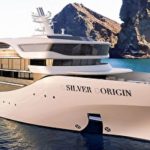
Das eleganteste Schiff, das je zu den Galapagos-Inseln fuhr. Die Silver Origin ist das allererste speziell auf ein Reiseziel ausgerichtete Schiff, das je von Silversea gebaut wurde, und bietet Erlebnisreisen zu den Galapagos-Inseln auf höchstem Niveau. Noch nie zuvor wurden die Inseln in einem so hervorragenden Rahmen präsentiert: Ein Team ecuadorianischer Experten als Reiseführer, das höchste Crew-zu-Gast-Verhältnis auf den Galapagos-Inseln überhaupt, acht Zodiacs sowie flexible und anpassungsfähige Mehrzweckbereiche, die beste Voraussetzungen für eine außergewöhnliche Reise bieten – eben für außergewöhnliche Menschen. Mit Horizon Balconies, einer Unterbringung nur in Suiten, einem Butler-Service, raffinierten Einrichtungen, einem interaktiven Basecamp und einer ecuadorianisch inspirierten Küche wurde nicht einmal das kleinste Detail auf der Silver Origin dem Zufall überlassen. Das umweltbewussteste Schiff, das wir je gebaut haben, steht für einen Entwicklungssprung und übertrifft bei weitem jegliche Vorstellungen, die Sie vielleicht von einer Reise mit der Silver Origin hatten. FÜR DIE GALAPAGOS-INSELN GESCHAFFEN Ein Hauch von elegantem italienischem Luxus, kombiniert mit einem erstaunlichen Expeditionserlebnis, wird Luxusreisen zu den Galapagos-Inseln ganz neu definieren. Von den Vorbereitungen im Basecamp für eine eintägige Erkundungstour mit dem Zodiac bis hin zu gemütlichen Abenden mit Freunden an der Feuerstelle in der Explorer Lounge bietet die Silver Origin Ihnen die Möglichkeit, weit über Ihre Exkursionserlebnisse hinaus in die Welt Ihres Reiseziels einzutauchen. Lust auf mehr? Die beiden Restaurants der Silver Origin bieten köstliche lokale, nationale und internationale Gerichte, die Ihnen das Wasser im Mund zusammenlaufen lassen. Und das Beste: Es ist all-inclusive.
Restaurant
The Grill
Explorers Lounge
Observation Lounge
Krankenstation
14 Nächte mit der Silver Origin - - Abfahrt 14.11.2026


Vielen Dank für Ihre Anfrage. Sie werden von uns so schnell wie möglich eine entsprechende Offerte erhalten. Beste Grüsse Ihr Cruisetour-Team