







![Suite du Propriétaire 1 – [O1]](https://cruisetour.ch/volume/images/original/1600268966.jpg)
![Suite du Propriétaire 2 – [O2]](https://cruisetour.ch/volume/images/original/1600268970.jpg)
![Grande Suie 2 – [G2]](https://cruisetour.ch/volume/images/original/1600269010.jpg)
![Grande Suite 1 – [G1]](https://cruisetour.ch/volume/images/original/1600269005.jpg)
![Suite Royale 2 – [R2]](https://cruisetour.ch/volume/images/original/1600269299.jpg)
![Suite Royale 1 – [R1]](https://cruisetour.ch/volume/images/original/1600269295.jpg)
![Suite Argent – [SL]](https://cruisetour.ch/volume/images/original/1600269329.jpg)
![Suite Véranda de luxe – [DV]](https://cruisetour.ch/volume/images/original/1600269393.jpg)
![Suite Véranda – [VR]](https://cruisetour.ch/volume/images/original/1600269432.jpg)
![Suite Vista – [VI]](https://cruisetour.ch/volume/images/original/1600269466.jpg)
![Suite Medallion – [ME]](https://cruisetour.ch/volume/images/original/1600269364.jpg)





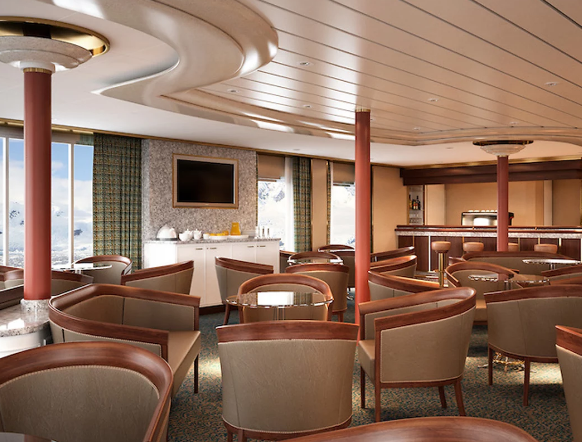
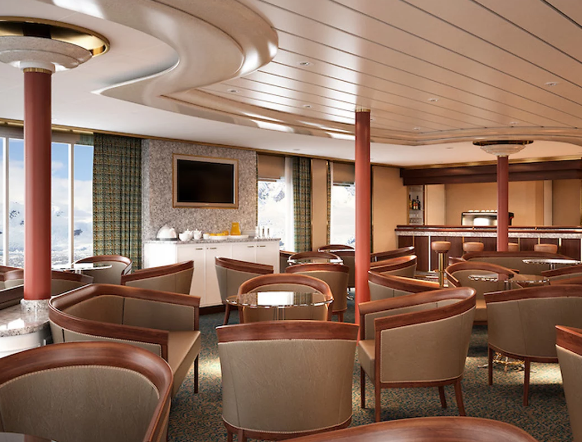

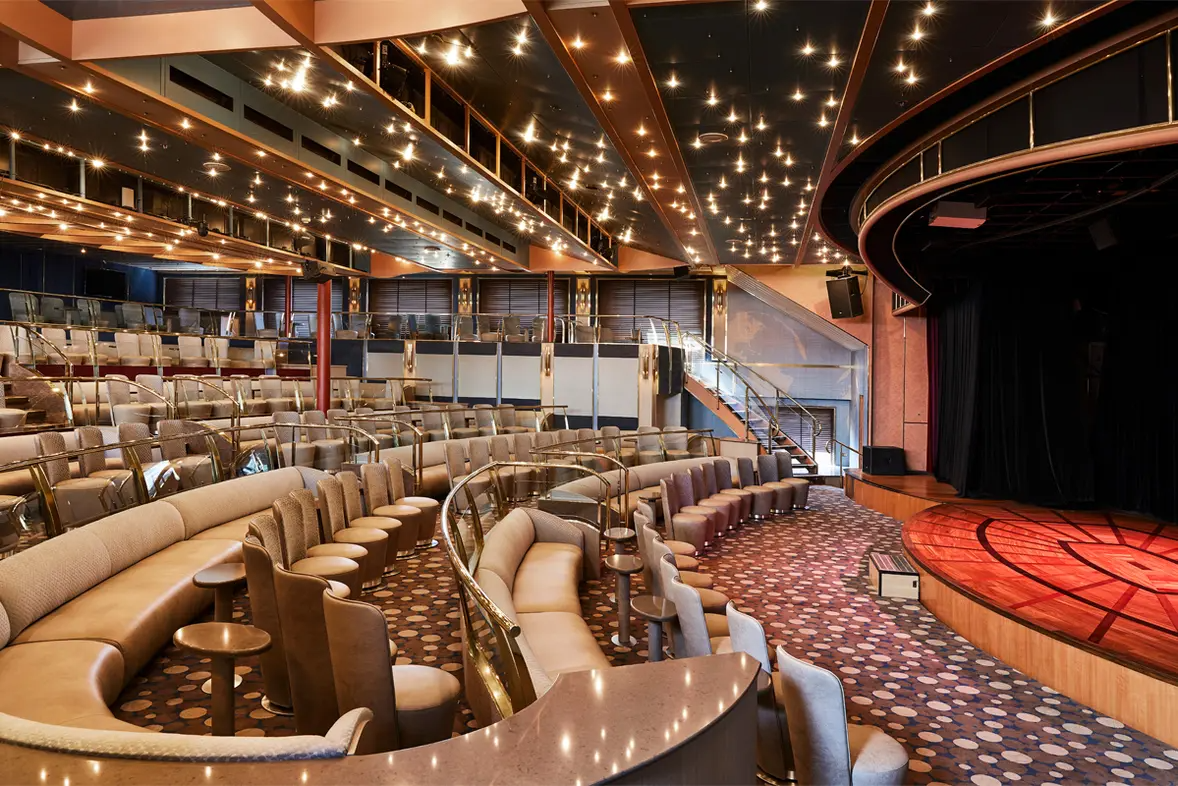

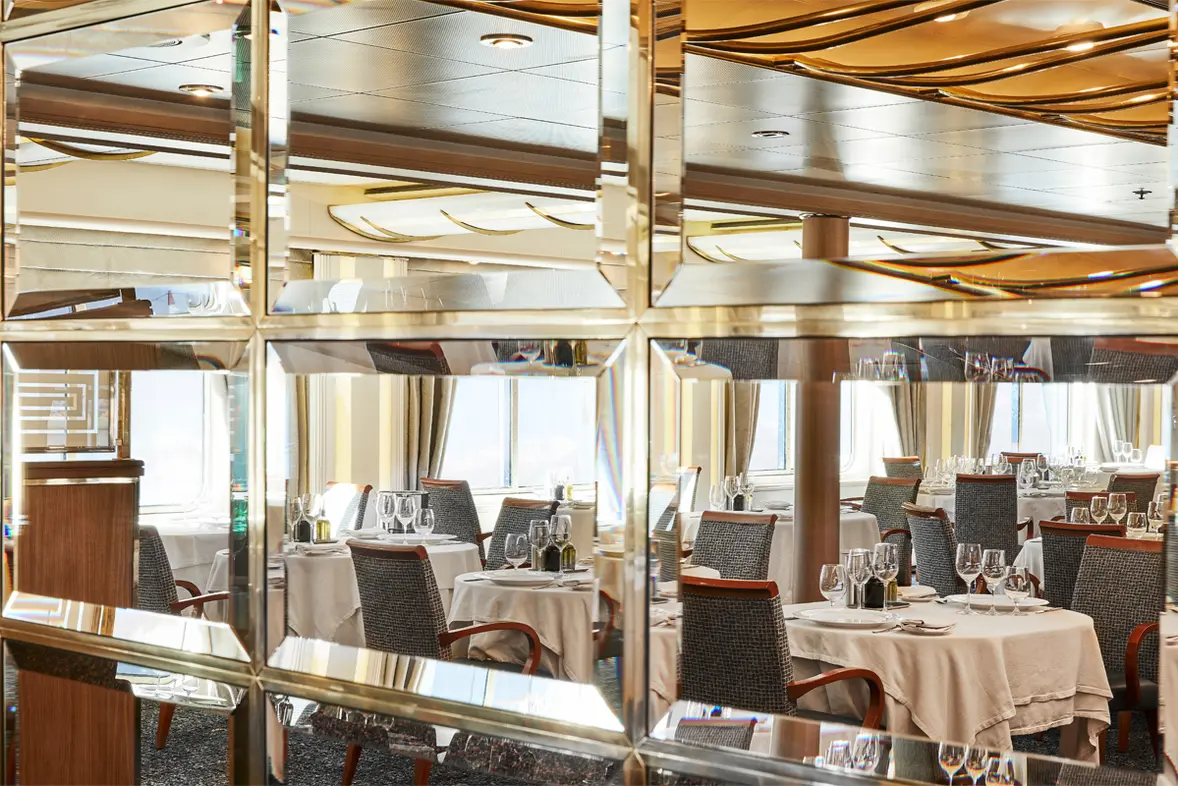
Itinéraire Papeete, Tahiti. Polynésie Française - Fakarava, Îles Tuamotu - Atuona, Hiva Oa. Îles Marquises - Tahuata, îles Marquesas - Hatiheu, Nuku Hiva - Hanavave, Fatu Hiva - Mangareva, Îles Gambier - Adamstown, Îles Pitcairn - Adamstown, Îles Pitcairn - Ile de Pâques, Chili plus

Formé par deux anciens volcans et reliée à l’isthme de Taravao, Tahiti est la plus grande île de l’archipel de la Société et le coeur économique de la Polynésie française. Depuis que le célèbre peintre impressionniste français Paul Gauguin immortalisa de jeunes filles tahitiennes dans des couleurs vives sur ses toiles, Tahiti a une allure mystérieuse et concentre encore tout le romantisme du Pacifique Sud en tant que paradis tropical. S’élevant au centre, le mont Orohena et le Mont Aorai sont les sommets les plus élevés; de profondes vallées rayonnent dans toutes les directions de ces pics centraux. Des pentes abruptes tombent brusquement de hauts plateaux jusqu’aux plaines côtières. La côte nord-est accidentée et rocheuse sans barrière de corail, et donc exposés à d’intense vagues déferlantes. Des villages sont situés sur une bande étroite entre mer et montagnes. La côte sud est vaste et douce avec de grands jardins et des bosquets de cocotiers; une barrière de corail forme un bouclier, la protégeant de la mer.
Fakarava est de forme oblongue et possède un chapelet presque continu de récifs et de motu qui s’étend sur 40 km à l’est. C’est le deuxième plus grand atoll des Tuamotu, situé à 450 km au nord-est de Tahiti et à 120 km au sud-est de Rangiroa. Il est réputé pour ses plongées dérivantes dans ses deux passes : la passe de Garuae (également orthographiée Ngarue) au nord, près de la ville principale de Rotoava (et de l’aéroport), et la passe de Tamakohua, située à 48 km de l’autre côté du lagon, au sud.
Le minuscule village de Tetamanu, situé près de la passe sud, était autrefois la capitale des Tuamotu et abrite la première église construite dans l’archipel en 1874. En 2006, l’ensemble de l’atoll a été classé réserve de biosphère par l’UNESCO ; pour préserver le lagon, aucun bungalow n’y a été construit. Fakarava a été « découvert » par l’explorateur russe Fabian Gottlieb Von Bellingshausen en 1820 ; une vingtaine d’années plus tard, des missionnaires sont arrivés, sous la forme du prêtre catholique fanatique Honore Laval, et ont commencé à construire des églises.
La plus grande des îles du Sud, Hiva Oa, le pilier principal ou le fleuron de la « Grande Maison » – qui représente l’archipel des Marquises dans la mythologie locale – a toujours été la rivale de Nuku Hiva. L’île a la forme d’un hippocampe et dispose d’une chaîne de montagnes allant du Sud-Ouest au Nord-Est dont les principaux sommets, le Mont Temetiu et le Mont Feani qui forment un véritable mur autour de Atuona.
Dans les îles Gambier de la Polynésie française, Mangareva est la plus grande île avec une population de plus de 1 200 habitants. La plupart vivent à Rikitea, le plus grand village de l’île. Une haute crête centrale s’étend sur toute la longueur de Mangareva et culmine avec le Mont Duff, qui s’élève à plus de 440 mètres au-dessus de la mer sur la côte sud de l’île. L’île possède un grand lagon parsemé de récifs coralliens dont les poissons tropicaux et les huîtres à lèvres noires ont permis aux insulaires de survivre bien mieux que sur les autres îles voisines. Afficher moins
Les petits bateaux peuvent entrer dans le lagon de Mangareva. À terre, les visiteurs peuvent se promener dans la ville, voir les vestiges des bâtiments massifs en pierre et en corail datant du XIXe siècle ou escalader le mont Duff. Les points forts de la ville comprennent la cathédrale avec son autel en nacre et ses objets conçus et construits dans les années 1830 et 1840 et partiellement restaurés par les élèves de l’école de Rikitea il y a quelques années seulement.
Home to the original mutineers of the Bounty, Adamstown’s is today the capital of all four Pitcairn Islands. The islands – the last British Overseas Territory in the Pacific – include the namesake Pitcairn Island itself, plus the uninhabited Oeno, Henderson and Ducie. Pitcairn is the archipelago’s only inhabited island, with the population of just 50 centred in Adamstown. It is no surprise that the nine mutineers along with six Tahitian men, 12 Tahitian women and one child stopped on Pitcairn in 1790; with its sloped and varied landscape, lush tropical promise and equidistant location between Peru and New Zealand, Pitcairn would have seemed an ideal hiding spot for the mutineers to settle. The ship was burnt to avoid detection (the ballast stone remains of the wreck in Bounty Bay). However, the ideal bucolic life that mutineer leader Fletcher Christian had envisaged was not to be. Poor treatment of the Tahitian men led to alcoholism, chaos and carnage and by 1800 only John Adams – who had recently discovered Christianity – remained. Adams taught the women and children to read and write from the bible. The capital is named after him. Not only had the island been misplaced on early maps of the region, but it can also be very difficult to come ashore as large breakers tend to build up just in front of the small harbour of Bounty Bay. The local museum houses the HMS Bounty Bible, the same bible that Adams taught the women and children to read and write from in the early 19th century.
Home to the original mutineers of the Bounty, Adamstown’s is today the capital of all four Pitcairn Islands. The islands – the last British Overseas Territory in the Pacific – include the namesake Pitcairn Island itself, plus the uninhabited Oeno, Henderson and Ducie. Pitcairn is the archipelago’s only inhabited island, with the population of just 50 centred in Adamstown. It is no surprise that the nine mutineers along with six Tahitian men, 12 Tahitian women and one child stopped on Pitcairn in 1790; with its sloped and varied landscape, lush tropical promise and equidistant location between Peru and New Zealand, Pitcairn would have seemed an ideal hiding spot for the mutineers to settle. The ship was burnt to avoid detection (the ballast stone remains of the wreck in Bounty Bay). However, the ideal bucolic life that mutineer leader Fletcher Christian had envisaged was not to be. Poor treatment of the Tahitian men led to alcoholism, chaos and carnage and by 1800 only John Adams – who had recently discovered Christianity – remained. Adams taught the women and children to read and write from the bible. The capital is named after him. Not only had the island been misplaced on early maps of the region, but it can also be very difficult to come ashore as large breakers tend to build up just in front of the small harbour of Bounty Bay. The local museum houses the HMS Bounty Bible, the same bible that Adams taught the women and children to read and write from in the early 19th century.
Easter Island, the easternmost settled island of Polynesia, received its European name in 1722 when the island was seen by a Dutch expedition under Roggeveen on Easter Sunday. The triangular-shaped island of 163 square kilometers is famous for the hundreds of statues known locally as moai. Rolling hills covered in grassland, eucalyptus forest and a rocky shore surround Hangaroa, the island’s only village on the southwestern coast. This is where Captain Cook landed in 1774, where missionaries built the first church and where ships find the best protection from winds and swells. Small beaches and transparent waters invite swimmers and snorkelers, but it is the cultural aspect which attracts visitors. Since 1935 the island has been a National Historic Monument and today 43.5% of the island is a national park administered by the Chilean National Forest Corporation and Mau Henua, a local community group. The island’s national park has been declared a UNESCO World Heritage Site in 1995. Found slightly more than 3,500 kilometers west of Chile, the island was annexed in 1888. Used as a sheep ranch for many decades, the island was opened in 1965 and an airstrip was built. The US Air Force set up a base to record the behavior of the earth’s outer atmosphere and by 1987 NASA had the runway extended as an emergency runway for the space shuttle. This never happened, but tourism benefitted from this improvement and today the island receives more than 100,000 visitors a year.
Easter Island, the easternmost settled island of Polynesia, received its European name in 1722 when the island was seen by a Dutch expedition under Roggeveen on Easter Sunday. The triangular-shaped island of 163 square kilometers is famous for the hundreds of statues known locally as moai. Rolling hills covered in grassland, eucalyptus forest and a rocky shore surround Hangaroa, the island’s only village on the southwestern coast. This is where Captain Cook landed in 1774, where missionaries built the first church and where ships find the best protection from winds and swells. Small beaches and transparent waters invite swimmers and snorkelers, but it is the cultural aspect which attracts visitors. Since 1935 the island has been a National Historic Monument and today 43.5% of the island is a national park administered by the Chilean National Forest Corporation and Mau Henua, a local community group. The island’s national park has been declared a UNESCO World Heritage Site in 1995. Found slightly more than 3,500 kilometers west of Chile, the island was annexed in 1888. Used as a sheep ranch for many decades, the island was opened in 1965 and an airstrip was built. The US Air Force set up a base to record the behavior of the earth’s outer atmosphere and by 1987 NASA had the runway extended as an emergency runway for the space shuttle. This never happened, but tourism benefitted from this improvement and today the island receives more than 100,000 visitors a year.
Think of Daniel Defoe’s classic novel Robinson Crusoe and you will be picturing an intrepid castaway, marooned on a paradisiacal island. That image might be ideal for movie lovers, but the actual inspiration for Robinson Crusoe was a salty Scottish seadog who went by the name of Alexander Selkirk. Selkirk was marooned in Chile’s Juan Fernandez archipelago for four years and four months, rescued by a British private warship. Despite Selkirk’s slightly chequered past, he was greeted as a celebrity upon his return to England. His adventures were given a gloss and immortalised in the much loved 18th century classic. Alejandro Selkirk Island is located 165 kilometres west of the other islands in the archipelago, for a surface area of just under 50 m2. The island was renamed from its Spanish name Isla Más Afuera in 1966 by the Chilean government in homage to the sailor. The topography is very different form the Caribbean dream that Defoe writes about, think dense woodland, rugged coast and peaks, shrouded (more often than not) in cloud. Sandy beaches can be found to the north of the island. Throughout much of its history, the island has been uninhabited, although there is a former penal settlement on the middle of the east coast, which operated from 1909 to 1930. During the summer months, Selkirk welcomes a small community of lobster fishermen and their families who come from Robinson Crusoe. As part of the Chilean National Park, it also holds the UNESCO World Biosphere Reserve title.
Sa sympathique population anglophone offre un mélange unique de cultures africaine, espagnole, indiens Paya et britanniques. Les colons britanniques et espagnols ont envahi le Paya dans la mesure où leurs pays respectifs se disputaient la possession de Roatan au XVIème siècle. Peu de temps après, les pirates, atteignant un nombre de près de 5.000 personnes, dont Henry Morgan, revendiquèrent Roatan comme leur fief. Au plus fort de la traite négrière, Roatan est devenue un dépotoir pour les esclaves rebelles que les Britanniques ne parviendraient plus à contrôler sur le long terme. Ces esclaves naufragés, maintenant appelé Marrons ou Garifuna, forment un groupe ethnique aujourd’hui près de la ville de Punta Gorda. Ce mélange unique de peuples et de cultures, actuellement contrôlé par le Honduras, a créé une population dotée d’une riche tradition et très accueillante pour les visiteurs.
Since time immemorial Valparaiso has inspired writers, poets, musicians and artists alike. If the city is still a little rough around the edges, this only adds to its bohemian ambience; the architecture, style, street art, nightlife, and live music scenes of Valparaiso are some of the best in the world. Add colourful clifftop homes to the mix and you’ll soon see why Valpariaso is many people’s favourite Chilean city. The city was founded in 1536 by Spanish conquistador Juan de Saavedra, who named the city after his birthplace. View less
Many of the colonial buildings he implemented are still standing today, despite the rain, wind, fire and several earthquakes (one of which almost levelled the city in 1906). Quirky architecture also abounds; poetry lovers and amateur architects will no doubt want to make the 45 km trip south to Chilean poet laureate (and Nobel Prize winner) Pablo Neruda’s ship-shaped house and museum for a taste of the extraordinary. The city and region are also extremely well known for their love of good food and wine. The vineyards of the nearby Casablanca Valley – first planted in the early 1980s – have earned worldwide recognition in a relatively short space of time. However, Chile’s viticulture history does date back much farther than that. De Saavedra brought grape vines on his voyage to South America in order to make his own wine and this led to a new grape brandy being created, Pisco. Today give any Chilean a Pisco and wherever they are in the world, they will be home.
23 nuits avec Silver Cloud - - Départ 12.10.2026


Nous vous remercions de votre demande. Nous vous ferons parvenir une offre dans les plus brefs délais. Meilleures salutations Votre équipe Cruisetour