

Itinéraire Buenos Aires - Ushuaia - Cape Horn - Puerto Williams, Chile - Garibaldi Glacier - Chilean fjords - Chilean fjords - Puerto Natales - Puerto Natales - Puerto Edén plus

Buenos Aires is Argentina’s big, cosmopolitan capital city. Its center is the Plaza de Mayo, lined with stately 19th-century buildings including Casa Rosada, the iconic, balconied presidential palace. Other major attractions include Teatro Colón, a grand 1908 opera house with nearly 2,500 seats, and the modern MALBA museum, displaying Latin American art.
Ushuaia is a resort town in Argentina. It’s located on the Tierra del Fuego archipelago, the southernmost tip of South America, nicknamed the “End of the World.” The windswept town, perched on a steep hill, is surrounded by the Martial Mountains and the Beagle Channel. It’s the gateway to Antarctica cruises and tours to nearby Isla Yécapasela, known as “Penguin Island” for its penguin colonies.
Cape Horn is a rocky headland on Hornos Island, in southern Chile’s Tierra del Fuego archipelago. It’s surrounded by wild seas off the southern tip of South America where the Pacific and Atlantic oceans meet. The albatross-shaped Cape Horn Monument commemorates the lives of thousands of seafarers who perished attempting to sail around the cape. A secluded lighthouse and the tiny Stella-Maris Chapel are nearby.
Puerto Williams is a town on Navarino Island in the Beagle Channel in Chile’s far south. Part of the Tierra del Fuego archipelago, it’s known as a starting point for trips around Cape Horn. It’s also a gateway to trails around the jagged peaks of the nearby Dientes de Navarino. In town, the Martin Gusinde Anthropological Museum traces the history of the region’s former inhabitants, the indigenous Yaghan people.
A prime specimen of the region, Garibaldi Fjord is known for its beautiful glaciers, which rise as tall as New York skyscrapers. The glaciers extend across a series of steep mountains and valleys, but they still harbor a rich ecosystem of plants and wildlife.
The southern coast of Chile presents a large number of fjords and fjord-like channels from the latitudes of Cape Horn to Reloncaví Estuary. Some fjords and channels are important navigable channels providing access to ports like Punta Arenas, Puerto Chacabuco and Puerto Natales.
The southern coast of Chile presents a large number of fjords and fjord-like channels from the latitudes of Cape Horn to Reloncaví Estuary. Some fjords and channels are important navigable channels providing access to ports like Punta Arenas, Puerto Chacabuco and Puerto Natales.
Puerto Natales is a port city on the Señoret Channel in Chile’s southern Patagonia. It’s the gateway to Torres del Paine National Park to the northwest, and the port for boats touring the Patagonian fjords. The Municipal Historical Museum in the city center exhibits artifacts from the region’s indigenous population. To the north is the vast Mylodon Cave, once inhabited by prehistoric, slothlike mylodons.
Puerto Natales is a port city on the Señoret Channel in Chile’s southern Patagonia. It’s the gateway to Torres del Paine National Park to the northwest, and the port for boats touring the Patagonian fjords. The Municipal Historical Museum in the city center exhibits artifacts from the region’s indigenous population. To the north is the vast Mylodon Cave, once inhabited by prehistoric, slothlike mylodons.
Villa Puerto Edén is a Chilean hamlet and minor port located in Wellington Island, in Natales commune, Última Esperanza Province, Magallanes Region. It is considered one of Chile’s most isolated inhabited places together with Easter Island and Villa Las Estrellas.
Tortel is a Chilean commune located at the outflow of the Baker River and Pascua River to the Pacific Ocean. It lies between the Northern and Southern Patagonian Ice Field in the Capitán Prat Province in the Aysén Region. The commune is administered by the municipality in Caleta Tortel, the principal settlement
Patagonia is a region encompassing the vast southernmost tip of South America, shared by Argentina and Chile, with the Andes Mountains as its dividing line. The Argentine side features arid steppes, grasslands and deserts, while the Chilean has glacial fjords and temperate rainforest. Argentina’s famed RN-40 highway passes the pinnacles of Monte Fitz Roy and Perito Moreno Glacier in Los Glaciares National Park.
The Castro District, in Eureka Valley, is synonymous with gay culture. Revelers often spill onto the sidewalks at numerous bars, like Twin Peaks Tavern, whose floor-to-ceiling windows were revolutionary when it opened in 1972. The lavish Castro Theatre and the GLBT Historic Museum are also found here, as are homey restaurants and adult shops. On Market Street, 19th-century F-line streetcars head to Fisherman’s Wharf.
Valparaíso is a port city on Chile’s coast. It’s known for its steep funiculars and colorful, clifftop homes. La Sebastiana, the quirky former residence of Chilean poet Pablo Neruda, is now a museum with far-reaching Pacific views. During the 19th century, an influx of European immigrants left their mark on the city’s architecture and cultural institutions, many of which congregate around downtown’s Plaza Sotomayor.
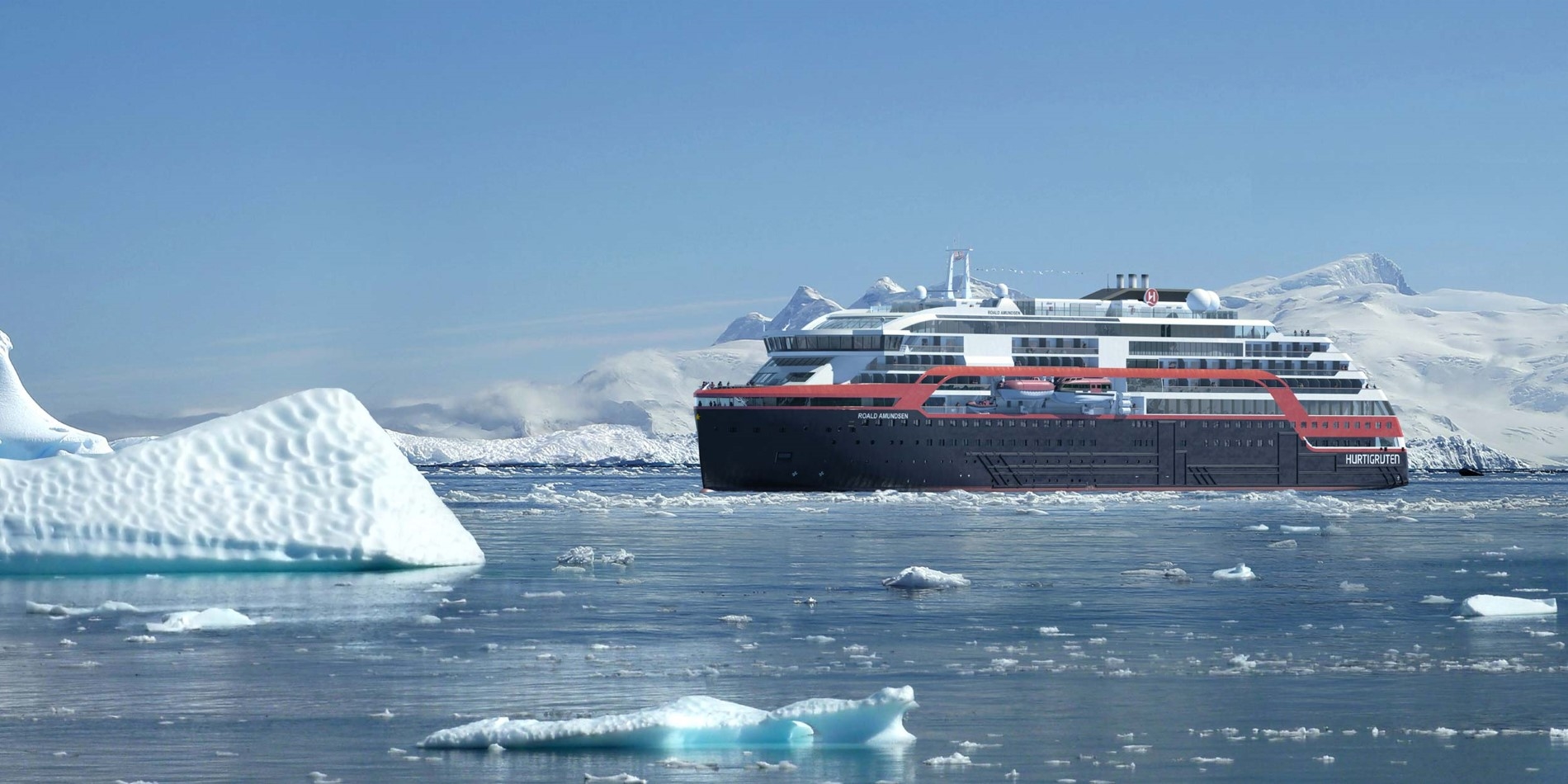
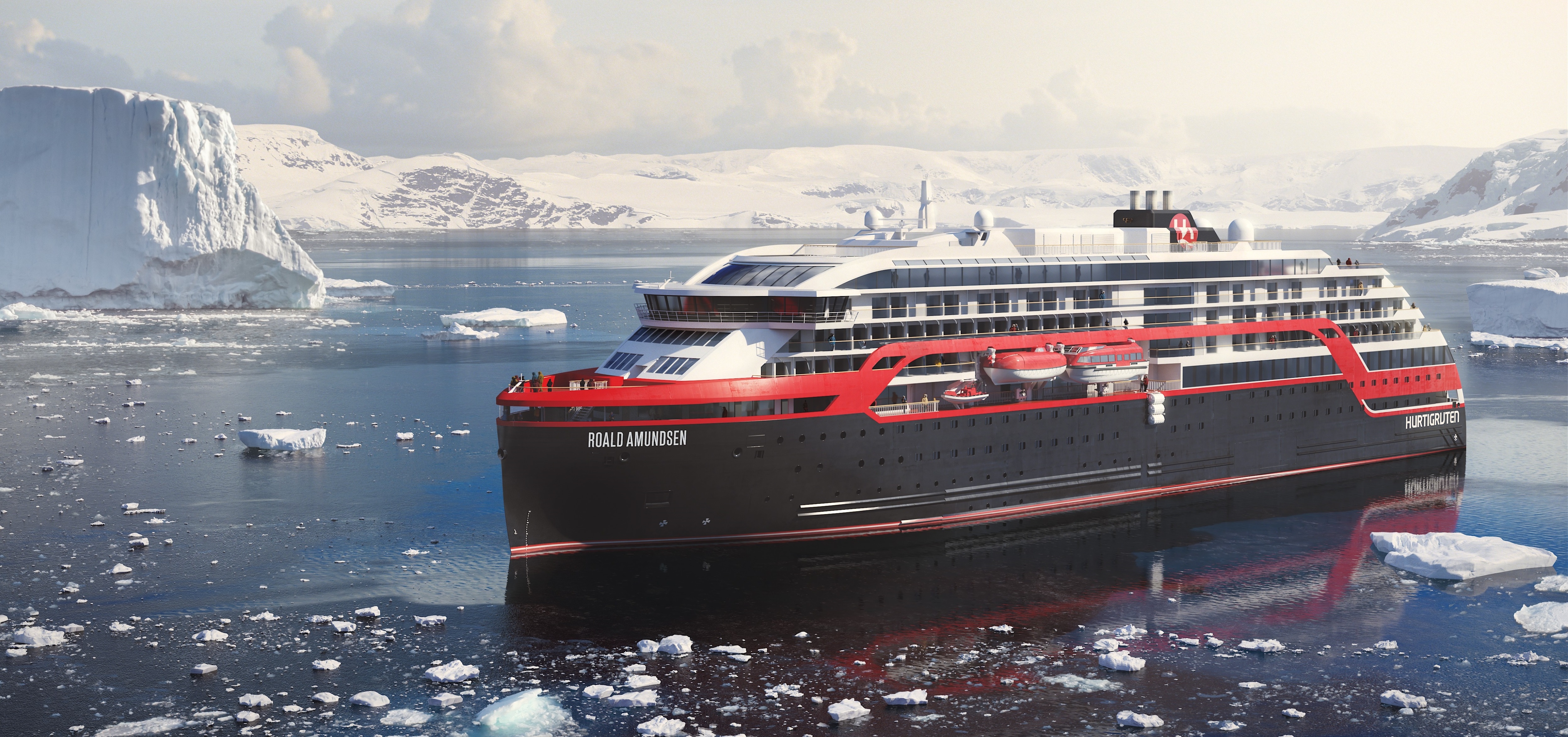
Im Jahr 2019 erweiterte Hurtigruten seine Flotte um ein brandneues Schiff: MS Roald Amundsen. Das hochmoderne Schiff verfügt über eine neue, besonders umweltfreundliche und nachhaltige Hybridtechnologie, die den Kraftstoffverbrauch deutlich reduzieren wird – und dabei der Welt beweist, dass Hybridantrieb bei großen Schiffen möglich ist.
MS Roald Amundsen ist das erste von zwei Hybridschiffen, in seine Flotte. Die Emissionen werden durch einen Fahrbetrieb mit elektrischem Antrieb gesenkt. Eine innovative und nachhaltige Technologie reduziert den Kraftstoffverbrauch und die CO2-Emissionen der Schiffe um 20 Prozent.
MS Roald Amundsen, benannt nach dem ersten Mann, der die Antarktis durchquerte und den Südpol erreichte, weist den Weg zu einer noch nachhaltigeren Art des Reisens. Das Schiff ist speziell auf Reisen in Polargewässern ausgelegt. Es dient als komfortables Basislager auf See und bringt Abenteurer aus aller Welt auf nachhaltigste Weise zu den spektakulärsten Zielen dieses Planeten.
Kabinen und Innendesign
Die atemberaubende Landschaft spiegelt sich auch in dem aufwändigen und komfortablen Innendesign wider. Skandinavische Naturmaterialien wie Granit, Eiche, Birke und Wolle werden verwendet, um entspannte und stilvolle Kabinen und öffentliche Bereiche zu schaffen. Alle Kabinen sind Außenkabinen, 50 % verfügen über einen eigenen Balkon und die Achtersuiten verfügen über einen privaten Whirlpool im Freien mit spektakulärer Aussicht.
Aussichtsdeck
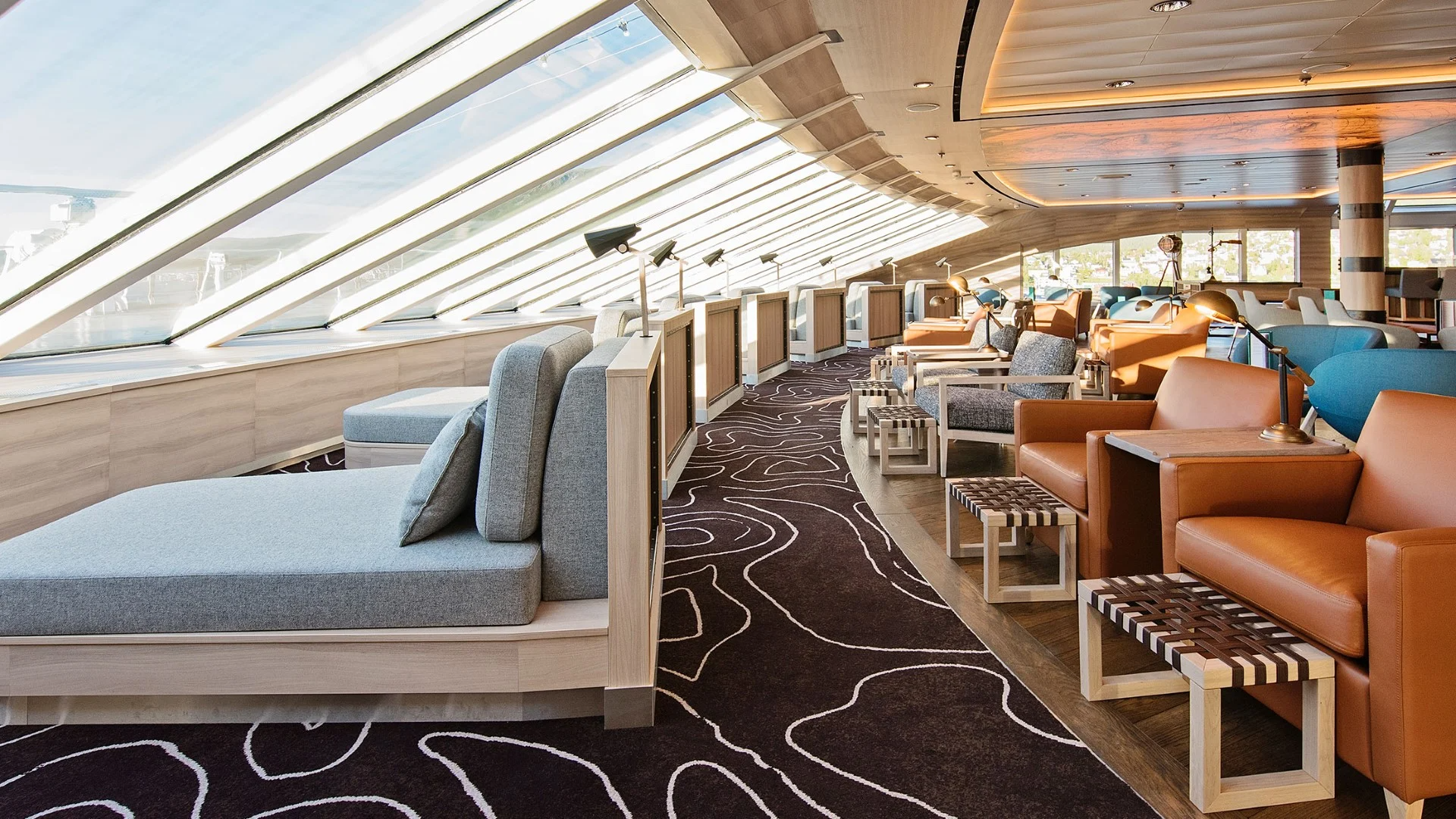
Eines der auffälligsten Designmerkmale im Außenbereich ist das auf zwei Ebenen angelegte Aussichtsdeck mit Innen- und Außenbereich. Dies ist der ideale Ort, um die vorbeiziehende Landschaft zu bewundern und um Wildtiere mit dem Fernglas zu beobachten.
Amundsen Science Center
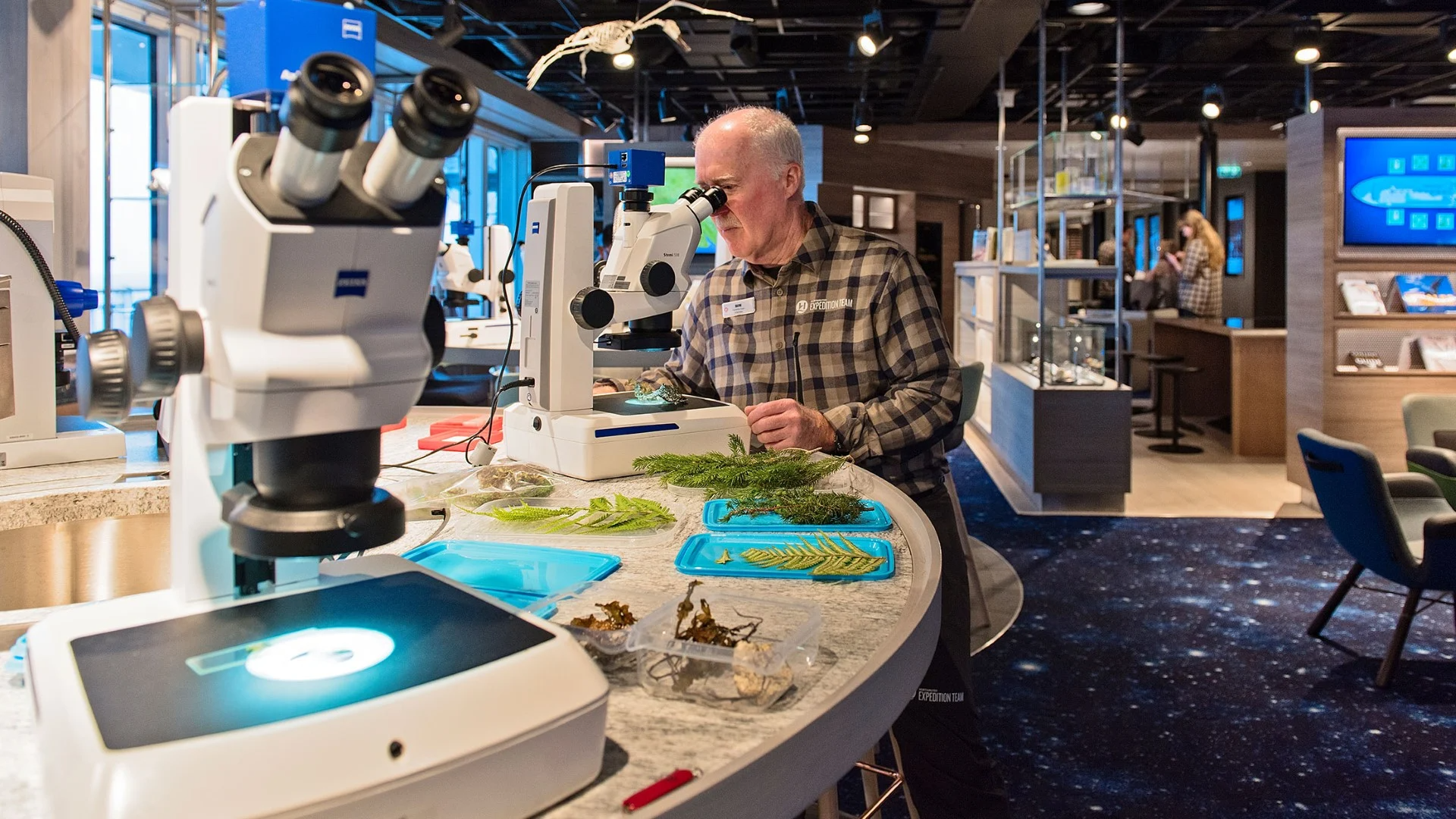
Dies ist das Herzstück Ihrer Borderfahrung. Das Science Center ist ausgestattet mit modernster Technologie und High-Tech-Geräten wie Touchscreens und wissenschaftlichem Equipment. Hier treffen sich Gäste und Mitarbeiter/Crew, um Kontakte zu knüpfen und ein tieferes Verständnis für die Regionen zu erlangen, die Sie erkunden. Die flexibel nutzbare Einrichtung bietet Vortragsräume, eine kleine Bibliothek und Spezialbereiche für Workshops in Fotografie, Biologie und mehr. Hier finden Sie auch Hurtigrutens sorgsam zusammengestelltes Expeditionsteam.
Restaurants
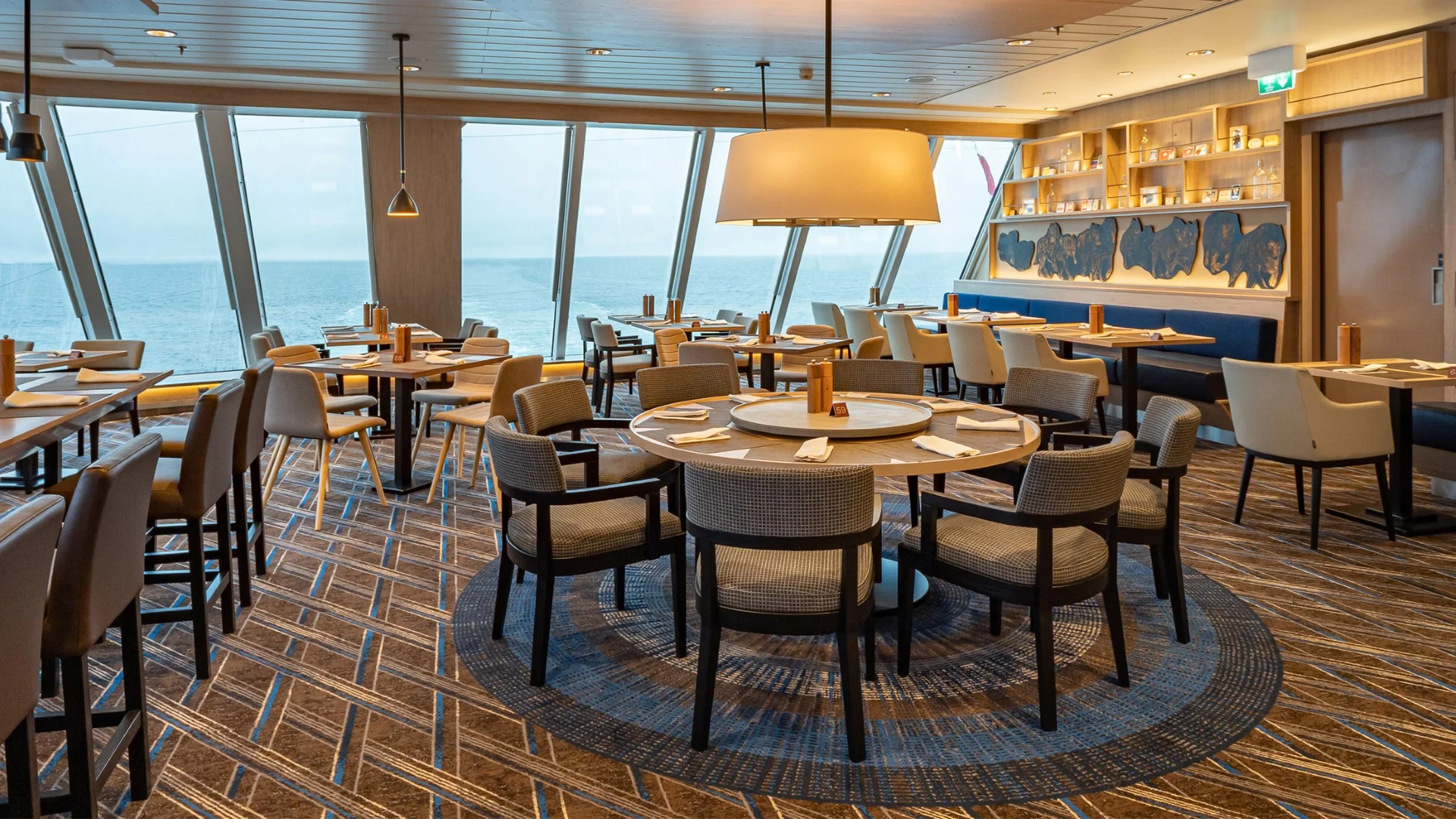
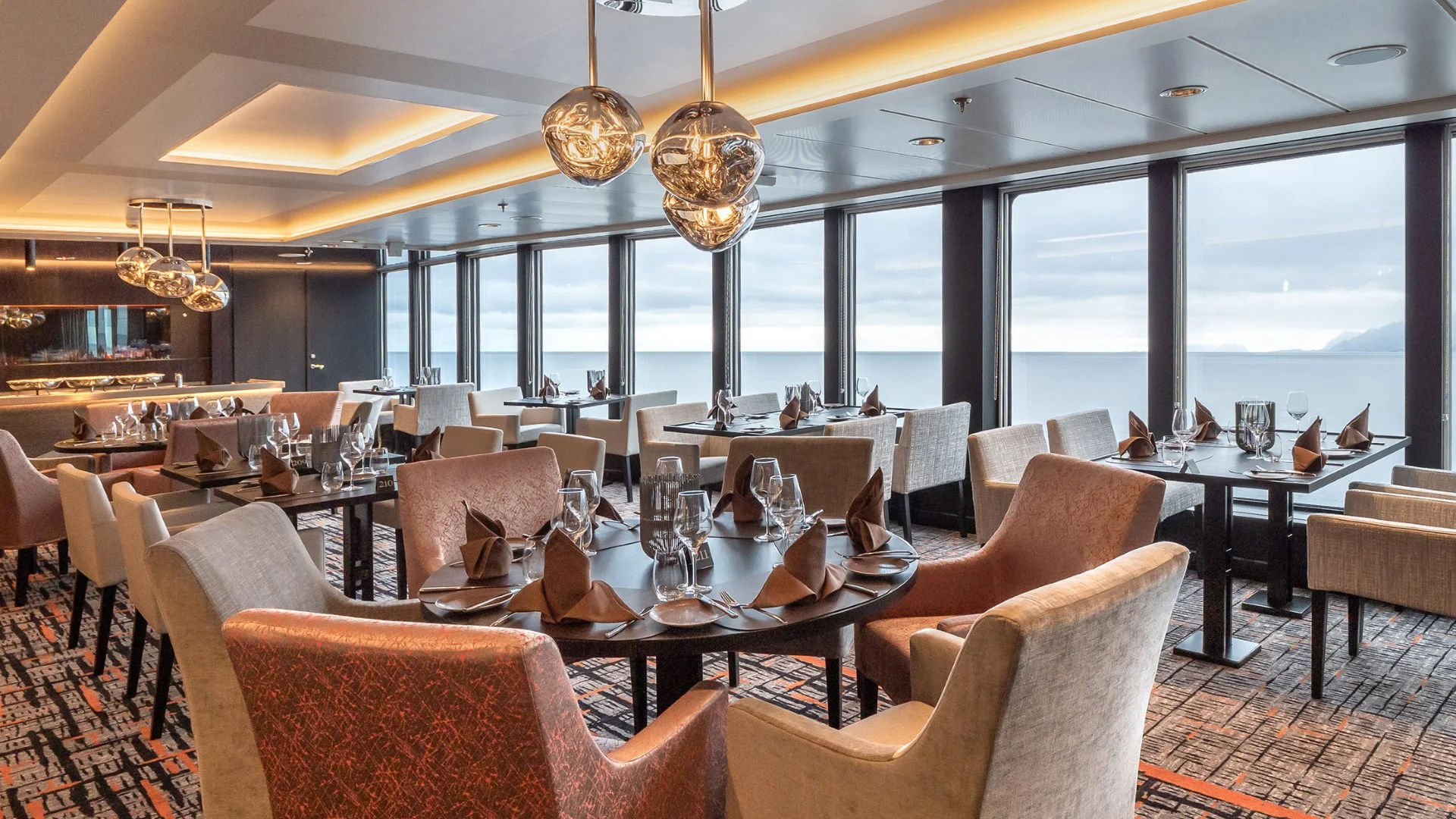
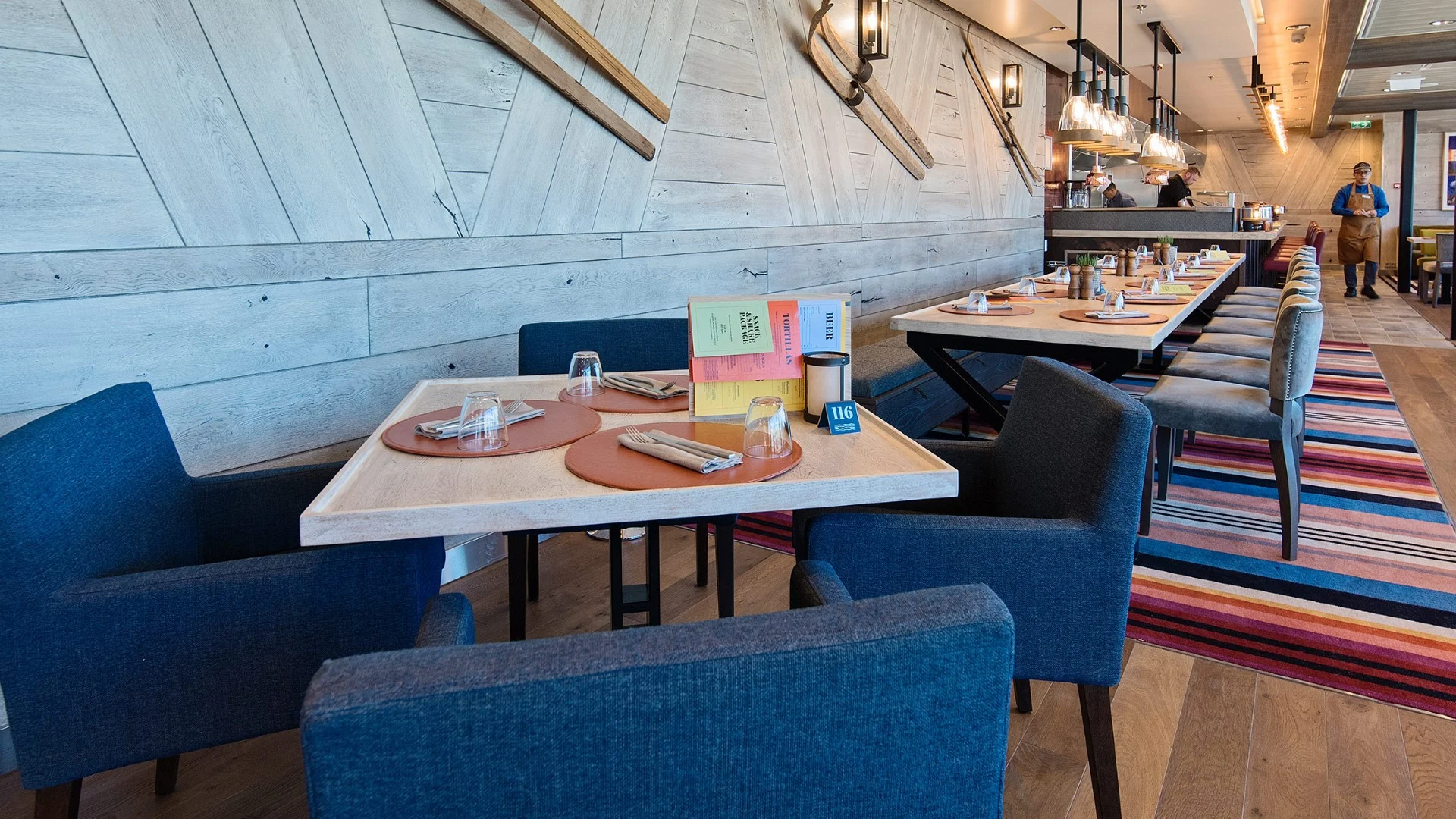
MS Roald Amundsen wird drei Restaurants bieten, die allesamt vom nordischen und norwegischen Kulturerbe inspiriert sind:
Das Hauptrestaurant Aune, benannt nach dem norwegischen Schiffsausrüster und Polarexpeditions-Versorger Tinus Aune.
Fredheim – der informelle und soziale Treffpunkt des Schiffes, benannt nach einer Jagdstation auf Spitzbergen aus den 1920er Jahren.
Lindstrøm, ein Spezialitätenrestaurant, benannt nach Adolf Lindstrøm, dem bevorzugten Koch der norwegischen Polarhelden.
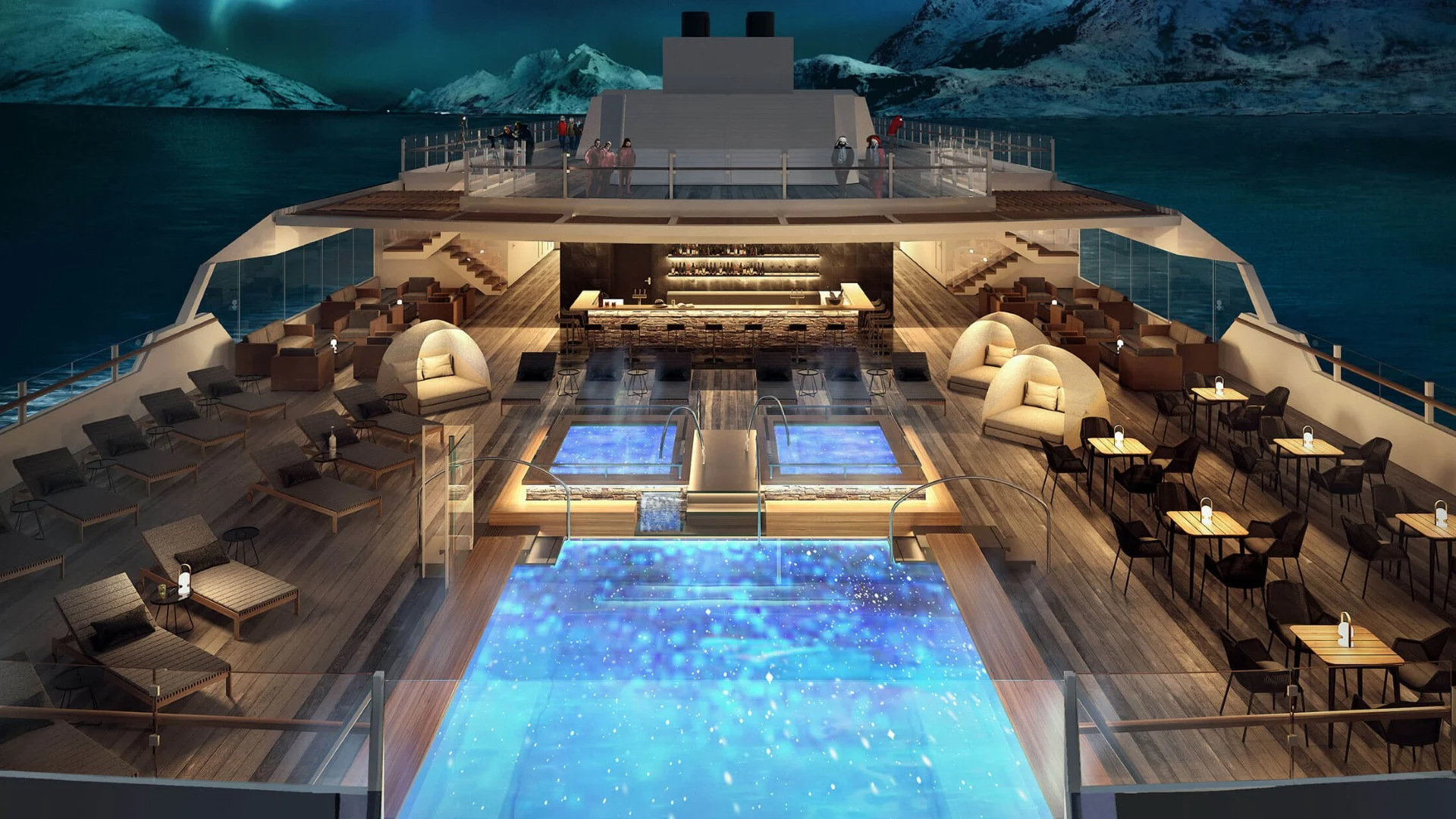
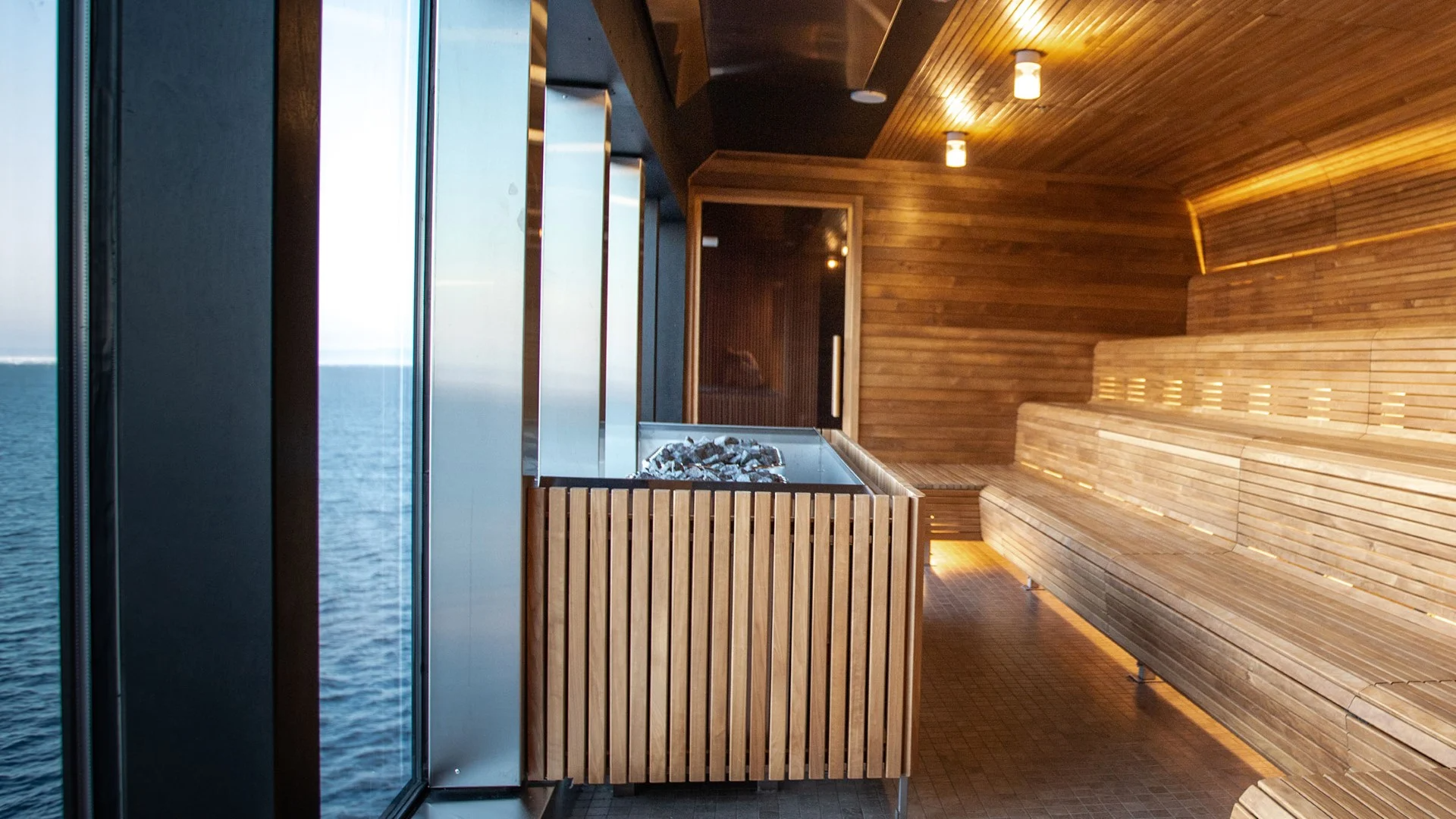
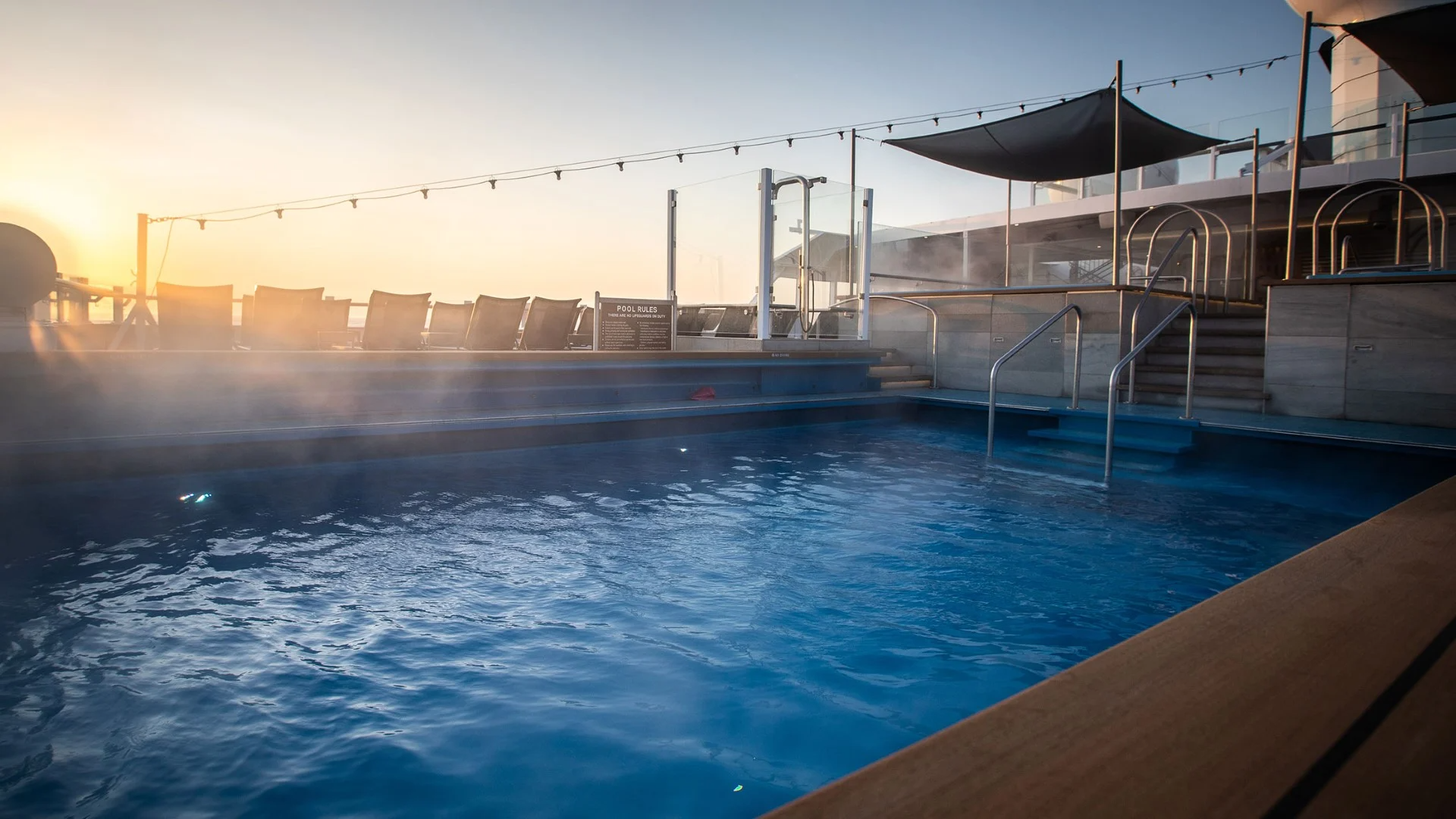
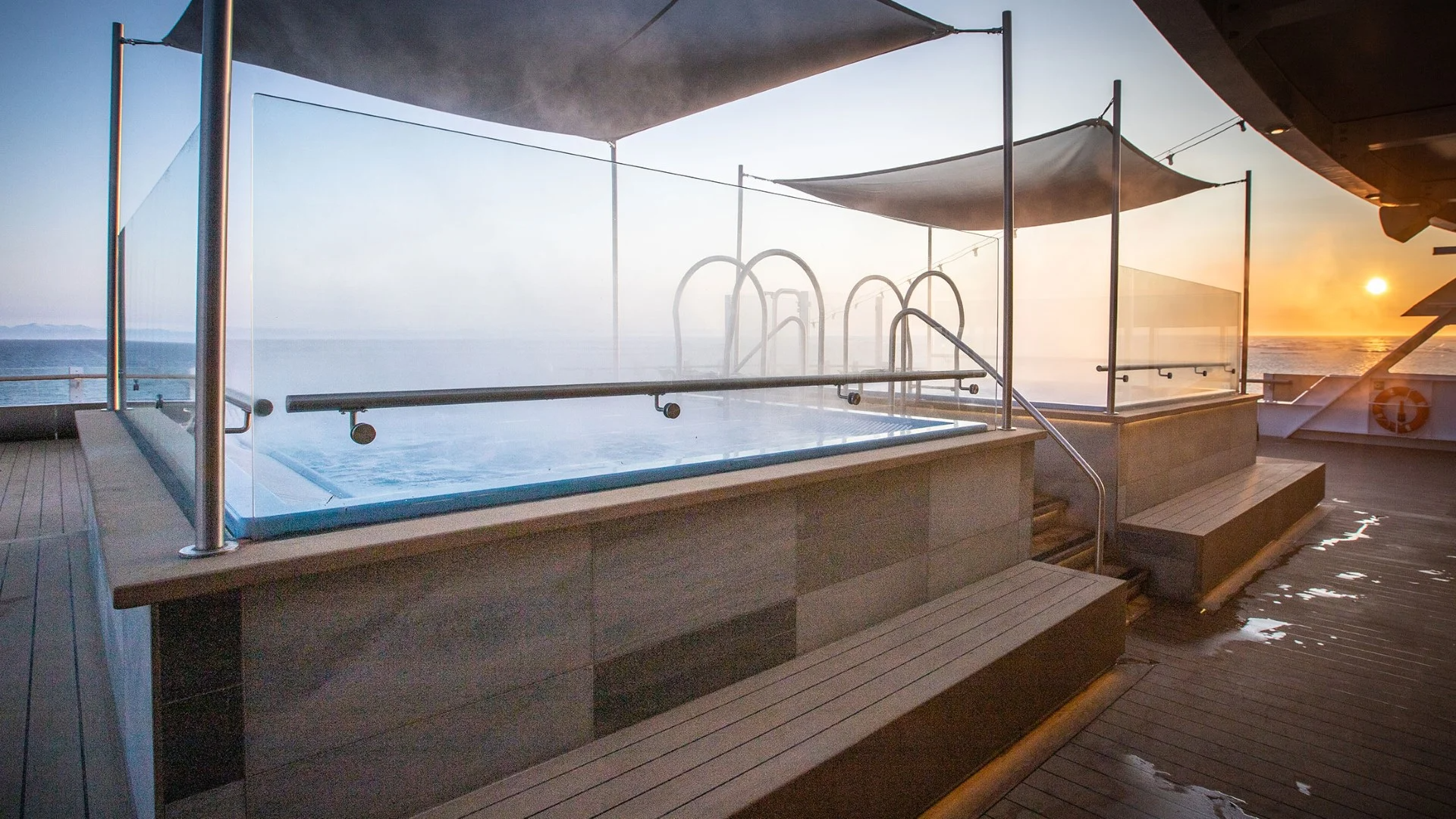
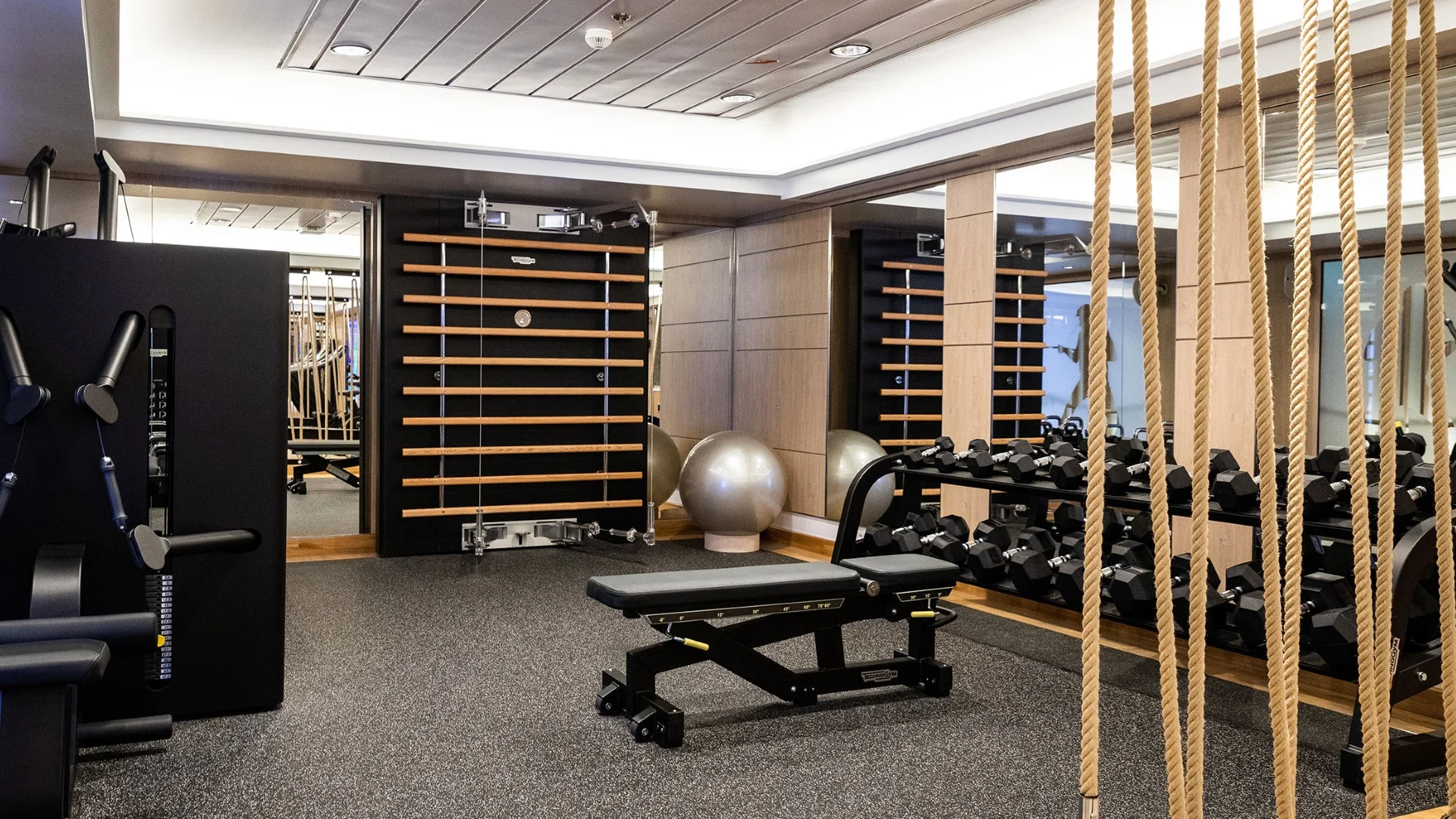
Nach einem Tag voller Erkundungen neuer Ziele können sich die Gäste in der eleganten Explorer Lounge oder einem großen Fitness- und Wellnesscenter entspannen und neue Kräfte tanken oder die Landschaft und die Sonnenuntergänge von den Innen- und Außenbereichen des riesigen Aussichtsdecks aus genießen – mit dem hinteren Infinity-Pool und den Whirlpools als einem der größten Highlights.
Bibliothek
Running Track
Expedition Team
Krankenstation
Aussichts-Deck
Empfang
Hauptspeisesaal
Restaurant
Jacuzzi
Pool-Deck
Fitnessstudio
Wellness Center
15 nuits avec MS Roald Amundsen - - Départ 26.03.2026


Nous vous remercions de votre demande. Nous vous ferons parvenir une offre dans les plus brefs délais. Meilleures salutations Votre équipe Cruisetour